
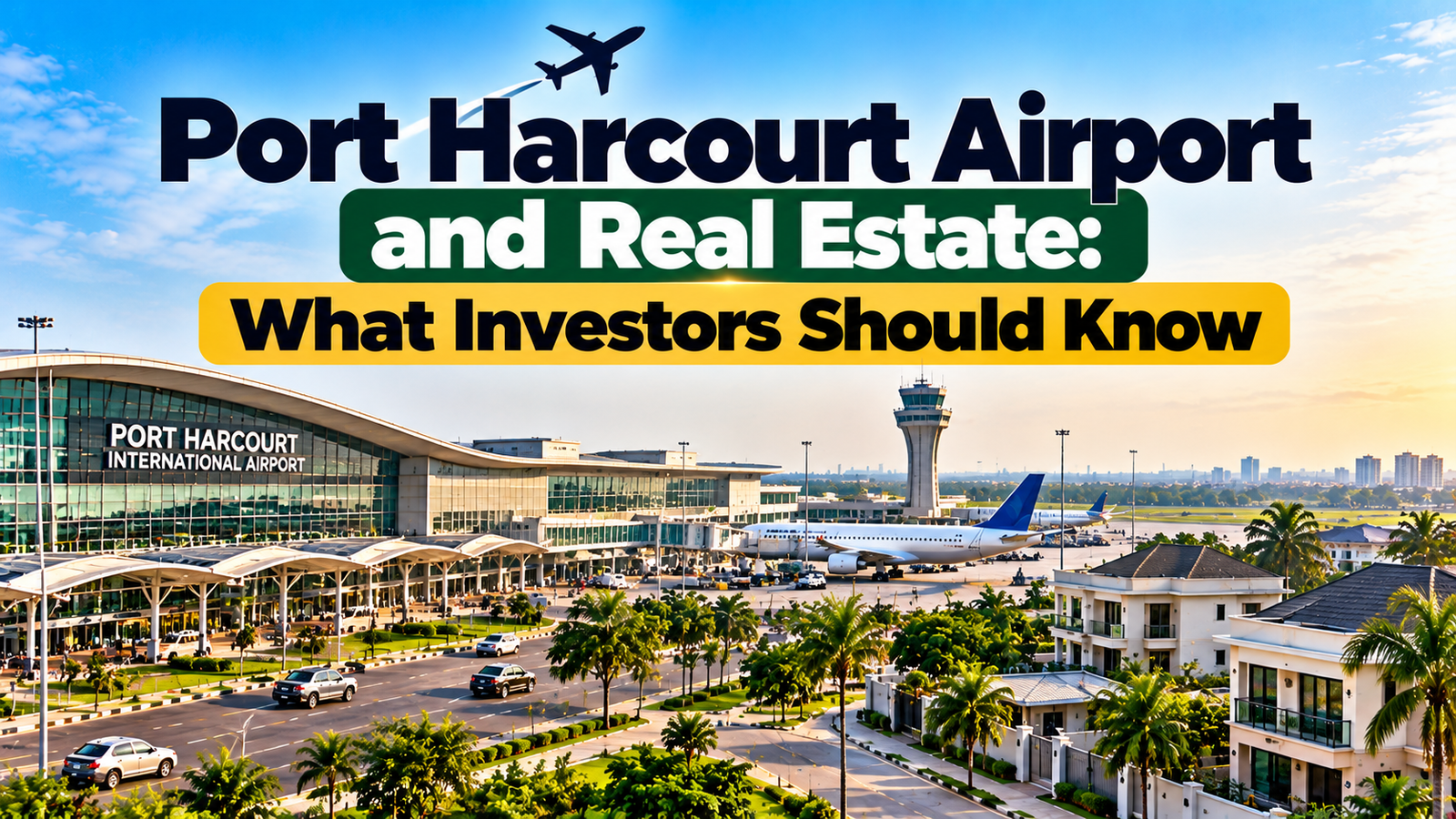
Port Harcourt Airport and Real Estate: What Investors Should Know

The location of an airport can effect how a city grows, where businesses operate and where people choose to live. In Port Harcourt, the international airport and the surrounding development corridors are worth watching for anyone interested in real estate investment.
Port Harcourt is an important commercial centre in the Niger Delta, with strong connections to Nigeria’s oil and gas industry. As businesses, workers and residential communities spread across the metropolitan area, locations along the airport corridor may offer opportunities for property buyers and developers.
However, buying property near an airport is not automatically a profitable investment. Understanding local demand, infrastructure, land documentation and development risks is essential before committing your money.
Why Port Harcourt Airport Matters to Real Estate
Port Harcourt International Airport serves travellers visiting Rivers State for business, employment and other purposes. Its importance extends beyond aviation because convenient air connections can support corporate activity, business travel and commercial relationships.
In 2026, the Infrastructure Concession Regulatory Commission identified the airport concession as a project covering the upgrade, expansion, operation and maintenance of passenger and cargo terminals. The commission also highlighted the airport’s strategic importance to Rivers State’s oil and gas economy.
For real estate investors, this makes airport-related infrastructure worth monitoring. Improved facilities and reliable connections can support economic activity, although the actual effect on property demand depends on how businesses and communities develop around the airport.
The Airport Corridor and Emerging Residential Areas
Areas around the airport, including parts of Omagwa, Igwuruta and the wider Ikwerre corridor, have attracted interest from land buyers and residential developers.
Some property listings along New Airport Road and nearby locations market land for residential development, reflecting interest in this part of the metropolitan area.
For investors, these locations may be worth investigating for future housing projects, estate development or long-term land holding. They may also appeal to buyers seeking a different entry point from established, higher-priced neighbourhoods in central Port Harcourt.
Nevertheless, development varies from one community to another. Before buying, confirm whether the particular plot has reliable road access, electricity, drainage and nearby services. A location described as an emerging growth area may still require considerable investment before it becomes suitable for housing.
Rental Properties Near the Airport
Airport-related activity can create demand for accommodation, but investors should identify the people who are most likely to rent in a particular location.
Potential tenants may include aviation workers, contractors, business travellers, professionals and families working in nearby employment centres. Depending on accessibility and local facilities, some properties could also serve people who need temporary accommodation.
Possible investments include:
- Self-contained apartments for individuals and workers.
- Two- or three-bedroom flats for families.
- Furnished accommodation for short-term stays, where demand is established.
- Residential estates designed for long-term tenants.
Before developing any of these property types, research the local rental market. Speak with property managers, examine comparable properties and find out what tenants are willing to pay.
Do not assume that proximity to the airport alone will guarantee high occupancy. A property that is difficult to reach, lacks essential services or is poorly maintained may struggle even when it is relatively close to an important transport facility.
Commercial Property and Business Opportunities
The airport corridor may also be relevant to selected commercial investments. Depending on local demand and planning permissions, opportunities could include offices, shops, storage facilities and service businesses.
The most suitable property will depend on the activity taking place nearby. A business that serves travellers may need a different location from a warehouse or a company supporting industrial operations.
Investors should study existing businesses, traffic patterns, road access and the distance to major commercial centres. They should also confirm that the intended use is permitted on the land.
It is better to identify a genuine business need before buying than to purchase land first and hope that future demand will appear.
Will Property Prices Rise Because of the Airport?
Airport infrastructure can contribute to development, but it does not guarantee that nearby land or houses will appreciate.
Property values are influenced by several factors, including accessibility, population growth, employment, public infrastructure, construction costs and the supply of available land.
A plot close to the airport may remain difficult to develop if the access road is poor or essential services are unavailable. Another property farther away may attract stronger demand because it is close to schools, shops, workplaces and established residential communities.
Investors should also avoid paying inflated prices based on promises that an airport project will immediately double land values. Infrastructure benefits may take time to reach surrounding communities, and some locations may benefit more than others.
Important Risks to Consider
Before buying property around Port Harcourt Airport, pay attention to the following issues.
Land ownership and documentation: Ask a qualified property solicitor to investigate the title, ownership history, survey plan and any competing claims. Confirm relevant records with the appropriate Rivers State land authorities before payment.
Flooding and drainage: Inspect the actual site, examine drainage and ask nearby residents about flooding during heavy rainfall. Conditions can vary significantly within the same corridor.
Airport-related restrictions: Check whether the property is affected by aviation safety requirements, noise considerations, height restrictions or other planning controls. Confirm these matters with the relevant authorities before designing a building.
Infrastructure and accessibility: Visit the location yourself. Check the roads, electricity, water supply, transport options and distance to everyday services.
Total investment cost: Include legal expenses, site preparation, fencing, construction, utilities, security and ongoing maintenance when calculating your budget.
How to Approach an Airport-Corridor Investment
Start by deciding whether your goal is rental income, commercial use, residential development or long-term land ownership.
Next, compare several locations rather than relying on one estate agent’s recommendation. Investigate recent asking prices, but remember that advertised prices are not necessarily completed sale prices.
Finally, calculate whether the investment makes sense under realistic conditions. If you plan to rent out a building, estimate income after vacancy periods, repairs, management expenses and other costs. If you intend to hold land, be prepared for the possibility that development may take longer than expected.
Final Thoughts
Port Harcourt Airport and its surrounding development corridor deserve attention from real estate investors because of their connection to transportation, business activity and the city’s wider economic growth.
Locations around Omagwa, Igwuruta and New Airport Road may offer opportunities for land buyers and developers, but each property must be assessed individually.
The smartest approach is to look beyond the airport’s presence. Investigate genuine housing or commercial demand, verify ownership documents, assess infrastructure and understand the costs involved.
Ultimately, successful real estate investment depends not simply on buying near an important landmark, but on choosing a property that meets a real need and makes financial sense over time. Adicsblogs is always avaliable to update you on real estate news.